

Keynote Speakers
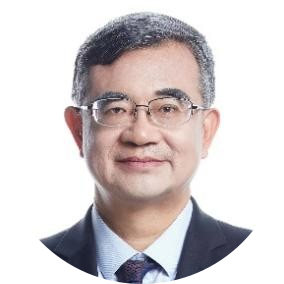
Prof. Gui-Lu Long
American Physical Society Fellow, IOP Fellow
Tsinghua University, China / Beijing Academy of Quantum Information Sciences, China
Speech
Title: Avoiding Decapitation
Strikes With Quantum
Communication
Abstract:
Decapitation strikes have become
one of the most important
offensive tactics in modern
warfare. The core of such
strikes lies in tracking and
precisely locating high-value
targets through
multi-dimensional means such as
satellites, electronic
surveillance, and cyber
infiltration. Traditional
communication systems are
incapable of perceiving
monitoring when a target’s
whereabouts have been
compromised. Therefore,
developing effective
anti-monitoring technologies is
critical to avoiding
decapitation strikes. Quantum
secure direct communication uses
quantum states as information
carriers; once subjected to
monitoring, its bit error rate
rises sharply, thereby alerting
users to the risk of location
exposure. This report introduces
the principle behind exposure
awareness in quantum secure
direct communication, presents
the current state of development
of this technology, and
discusses its future prospects.
Biography: Gui-Lu Long
is a professor at Tsinghua
University, and serves as the
Vice President of the Beijing
Academy of Quantum Information
Sciences. He received the
National Science Fund for
Distinguished Young Scholars, he
is also a Fellow of the American
Physical Society (APS) and the
Institute of Physics (IOP). He
holds several key academic and
professional roles, including
Director of the Quantum
Communication Committee of the
China Institute of
Communications, member of the
Quantum Science and Technology
Committee of the International
Union of Pure and Applied
Physics, member of the Quantum
Forum at the World Economic
Forum, Deputy Head of the expert
group for a national ministry,
and council member of both the
Association of Asia Pacific
Physical Societies and the Asia
Pacific Center for Theoretical
Physics. In addition, he serves
on the editorial board of Light:
Science & Applications, acts as
Editor-in-Chief of Quantum
Engineering and AAPPS Bulletin,
and holds editorial positions at
journals such as Science China,
Science Bulletin, Progress in
Physics, and EPL. Previously, he
was President and Vice President
of AAPPS, and held vice-chair
and member roles in the IUPAP
Working Group on Physics for
Development. Among his many
honors are National Outstanding
Doctoral Dissertation
Supervisor, National Outstanding
Science and Technology Worker,
Elsevier Highly Cited Chinese
Researcher for nine consecutive
years, IBM Global Outstanding
Scholar, and Special Government
Allowance from the State
Council. With a research focus
on quantum information, nuclear
physics, and
atomic/molecular/optical
physics, he has published over
500 SCI papers, accumulating
more than 30000 Google Scholar
citations. He has authored four
monographs and filed 62 Chinese
patents and five U.S. patent.
His awards include the National
Natural Science Award (Third
Prize and Second Prize), Thomson
Reuters Research Excellence
Award, Rao Yutai Physics Prize,
First Prize of the Natural
Science Award from the Ministry
of Education, and multiple top
recognitions in fields such as
electronics, communications, and
optics.
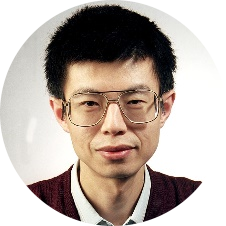
Prof. Qingsheng Zeng
Université du Québec an Outaouais, Canada
Speech Title: Analysis and Design of Lightweight, High-Efficiency, and Circularly Polarized Antennas for Satellite Platforms
Abstract: In this report, a lightweight and efficient circularly polarized all metal antenna design method suitable for satellite industrial applications is presented. The proposed antenna consists of a rectangular waveguide, which includes a high-order mode cavity, a feed, and a metasurface circular polarizer (MCP). The cavity higher-order mode TE440 is directly emitted from four coupling slots in the waveguide. MCP is placed on the cavity to generate circularly polarized (CP) radiation. Due to the introduction of high-order mode technology and MCP, all metal walls inside the antenna can be removed, significantly reducing weight. In order to reflect the weight advantage, the traditional metal wall loaded waveguide antennas with the same size were designed. The test results indicate that the antenna has a wider impedance and axial bandwidth, as well as higher radiation efficiency. Especially, the proposed antenna is 40% lighter than the comparative antenna, indicating that it is more suitable for satellite platforms with limited payload capacity.
Biography: Prof. Qingsheng Zeng, received his Ph.D. from University of Ottawa, Canada, and is currently a professor and PhD advisor of Université du Québec an Outaouais (UQO), an adjunct professor and PhD advisor of University of Ottawa, Carleton University, and Institut National de la Recherche Scientifique -- Centre Energie, Matériaux et Télécommunications (INRS-EMT). He has been a research engineer and a senior research engineer at Communications Research Centre Canada (CRC), Government of Canada. Dr. Zeng has undertaken research and teaching in several fields, including analysis and design of aircraft antennas, electromagnetic compatibility and interference (EMC/EMI), ultrawideband technology, radio wave propagation, computational electromagnetics. He has been the Chair of AP (Antennas and Propagation) / MTT (Microwave Theory and Techniques) Joint Chapter and Secretary of EMC (Electromagnetic Compatibility) Chapter of IEEE Ottawa, a Member of IEEE Canada Industry Relations Committee, and a senior member of IEEE. Dr. Zeng has been a member of the Strategic Projects Grant (SPG) Selection Panel (Information and Communications Technologies B) for the Natural Sciences and Engineering Research Council of Canada (NSERC), a member of Site Visit Committee of NSERC Industrial Research Chair (IRC), and a reviewer of NSERC Industrial R&D Fellowships.
He has published more than 200 SCI and EI indexed papers and technical reports, authored one book and co-authored two book chapters. His work on the project “Aggregate Interference Analysis and Suitability of Some Propagation Models to Ultra-wideband Emissions in Outdoor Environments” has formed one part of Consultation Paper on the Introduction of Wireless Systems Using Ultra Wideband Technology, Spectrum Management and Telecommunications Policy, Industry Canada, and has been taken as a significant contribution to International Telecommunication Union (ITU). Dr. Zeng has been serving as an editorial board member and a reviewer for a number of technical books and scientific journals, as a conference co-chair, a session chair and organizer, a technical program committee co-chair and member and a reviewer, a short course/workshop/tutorial presenter and a keynote speaker for many international and national symposia. He has won several technical and technical service awards, was ranked as one of the researchers at Communications Research Centre Canada with the strongest impacts in 2011, selected as a distinguished expert under the Plan of Hundreds of Talents of Shanxi Province in China during 2015, a Huashan Mountain Scholar Chair Professor of Xidian University in 2020, and a distinguished expert for HOME Program of China Association for Science and Technology in January 2023, and was elected as a member of the Council of the Academicians and Experts Association of Jilin Province in December 2023.
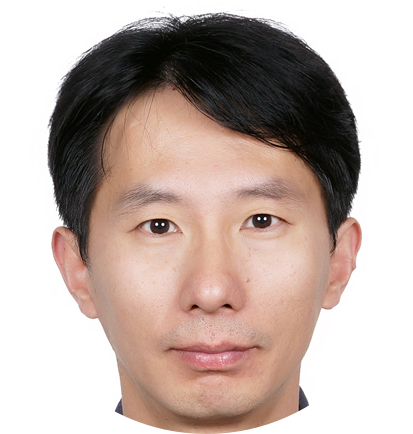
Prof. Haiyong Zheng
Ocean University of China, China
Speech Title: Multi-scenario Degraded Image Intelligent Interpretation
Abstract: Degraded images, resulting from synthesis, contamination, low light, and other factors, are ubiquitous. Due to the diversity in degradation types and degrees, various image restoration tasks, such as harmonization, inpainting, and enhancement, have emerged as significant topics in visual understanding and downstream applications. This speech will focus on the intelligent interpretation of degraded images across multiple scenarios, present the causes of quality degradation during image synthesis, occlusion, transmission, and capture, and explore artificial intelligence techniques to achieve efficient and accurate interpretation of degraded images.
Biography: Haiyong Zheng is a Professor at the Ocean University of China. His research focuses on AI, computer vision, and their applications in underwater perception and intelligent oceanography. He leads the Micronano Perception and Information Intelligence (MPII) group and has published over 100 papers in premier venues such as IEEE TPAMI, CVPR, and ICCV. Prof. Zheng serves as a Senior Member of IEEE and CSIG, chairs the IEEE OES Technical Committee on Optics and Imaging, and contributes to international working groups on plankton imaging and AI. He is a recipient of the InCoB 2017 Best Paper Award and the TaiShan Scholar Youth Expert title.
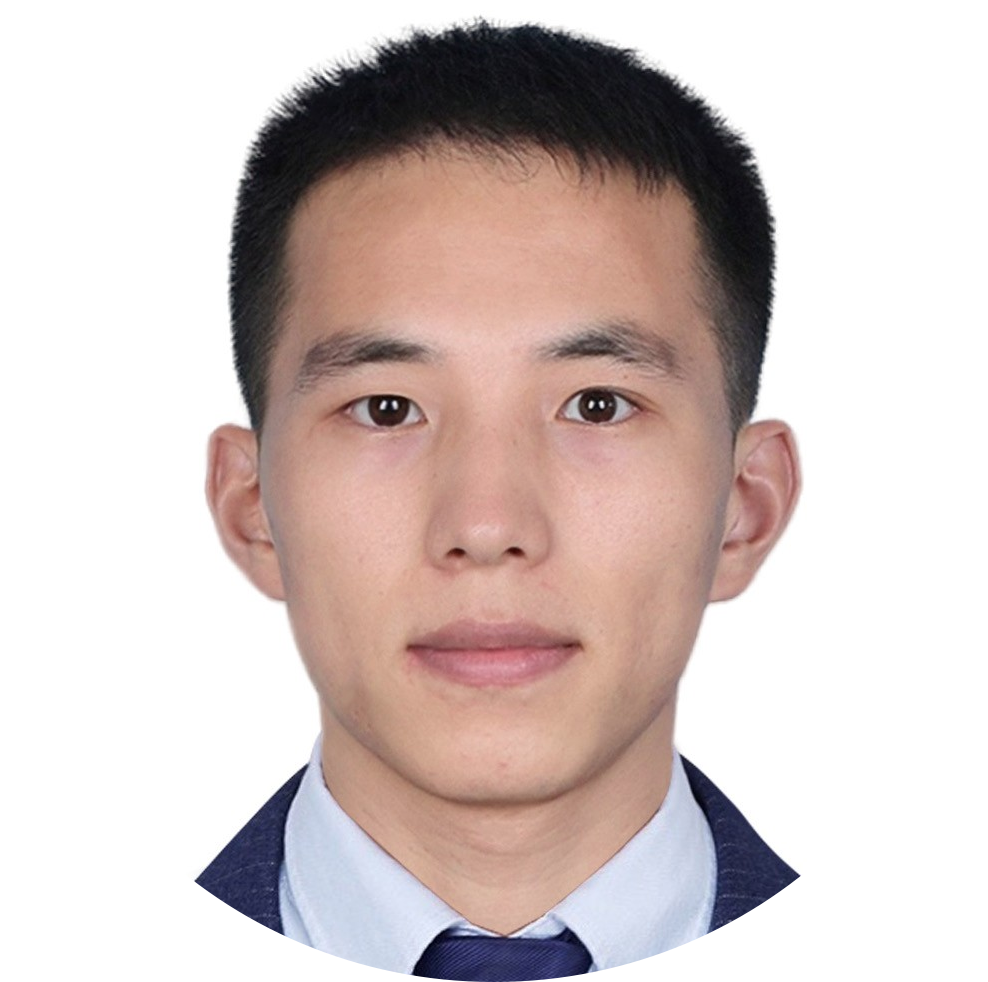
Prof. Zunsong Yang
Institute of Microelectronics of the Chinese Academy of Sciences, China
Speech Title: Low-Jitter and Low-Spur Sampling-Type Phase-Locked Loops
Abstract: Phase-Locked Loop (PLL) is a key building block in both wireless and wireline systems. As their data throughput increases, the PLL jitter requirements become more stringent, pushing sampling-type PLLs to be popular due to their ability to achieve low in-band phase noise. In this report, different techniques will be discussed to greatly improve the jitter and spur performances of the sampling-type PLLs without compromising the jitter-power figure of merit.
Biography: Zunsong Yang received the B.E. degree in microelectronics from Qingdao University, Qingdao, China, in 2014, the M.E. degree in electronics and communications engineering from the University of Chinese Academy of Sciences (UCAS), Beijing, China, in 2017, and the Ph.D. degree in electrical and computer engineering from the University of Macau, Macao, China, in 2021. From 2021 to 2023, he was a Project Researcher with The University of Tokyo, Tokyo, Japan, where he worked on the design of low-jitter RF/mmW PLLs. Since 2023, he has been a Professor with the Institute of Microelectronics of the Chinese Academy of Sciences (IMECAS), Beijing, China.
His current research interests include frequency synthesizers, RF and mixed-signal integrated circuits for communications and radars.
Dr. Yang was a recipient of the Akrostar Academic Prize from the University of Macau in 2021 and served as a Session Chair for IEEE ISCAS in 2024. He is currently serving as an Associate Editor for IEEE Solid-State Circuits Letters.